
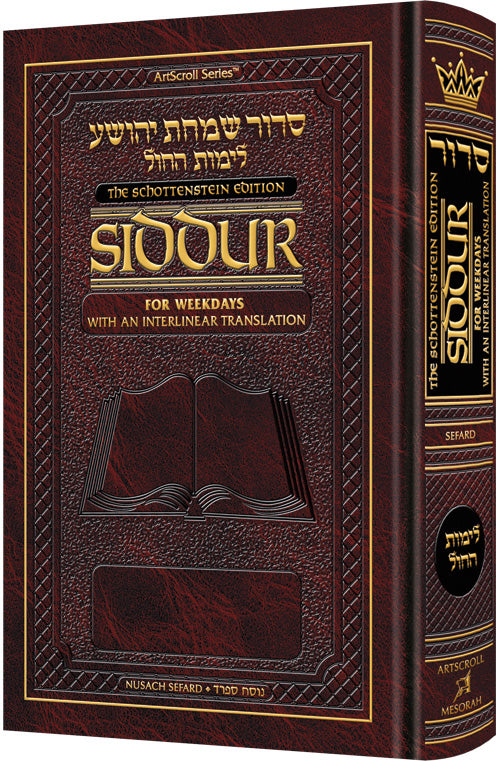
When people in America search for a siddur, Gemara, Chumash, Tehillim, or Jewish learning book in English, there’s a very good chance they end up with ArtScroll in their hands.
For many Jews across the United States — from yeshiva students in Brooklyn to business owners in Miami, from beginners in Los Angeles to families in Lakewood — ArtScroll became the bridge between traditional Torah learning and the modern English-speaking world.
And honestly? The Jewish publishing world before ArtScroll and after ArtScroll are almost two different eras.
What Is ArtScroll?
Mesorah Publications, best known through its ArtScroll imprint, was founded in Brooklyn, New York, in 1976 by Rabbi Meir Zlotowitz and Rabbi Nosson Scherman.
Their original goal sounded simple:
Make classic Jewish texts understandable, beautiful, and accessible for English-speaking Jews.
But what they ended up creating became one of the biggest revolutions in modern Orthodox Judaism.
Today, ArtScroll is considered one of the largest Judaica publishers in the world, especially in English-language Torah publishing.
How It All Started
The story began with a tragedy.
Rabbi Meir Zlotowitz wanted to publish a translation and commentary on Megillat Esther in memory of a friend who passed away. He partnered with Rabbi Nosson Scherman to write introductions and commentary.
Nobody expected what happened next.
The first print run — around 20,000 copies — sold out extremely quickly.
That success showed something powerful:
There were hundreds of thousands of Jews who wanted to learn Torah seriously… but struggled with Hebrew and Aramaic.
ArtScroll understood the problem before almost anyone else:
People didn’t just need translations.
They needed guidance.
So instead of printing dry academic translations, ArtScroll built books that explained the meaning, background, laws, stories, and practical understanding in a clear and elegant way.
That became the famous “ArtScroll style.”
The ArtScroll Style That Changed the Industry
Before ArtScroll, many Jewish books in English felt old-fashioned, difficult, or academic.
ArtScroll changed everything with:
- Clean page layouts
- Bold explanations
- Modern typography
- Step-by-step commentary
- English facing Hebrew text
- User-friendly formatting
- Strong visual presentation
- Luxury-quality printing and binding
Today this sounds normal.
Back then?
It was revolutionary.
Many Judaica publishers later copied the ArtScroll visual style, layout concepts, and learning format.
What Does ArtScroll Publish?
ArtScroll publishes far more than siddurim.
Their catalog includes:
- Siddurim
- Machzorim
- Chumashim
- Tehillim
- Gemara / Talmud
- Mishnah
- Tanach
- Halacha books
- Jewish history
- Mussar & hashkafa
- Cookbooks
- Children’s books
- Biographies
- Jewish novels
- Self-help & inspiration
- Daf Yomi editions
- Sephardic editions
- Hebrew and English editions
- Digital Torah learning products
By the 1990s they had already published more than 700 titles.
Today the number is dramatically larger.
The Stone Chumash — A Modern Jewish Classic
One of the most famous ArtScroll books ever created is the Stone Edition Chumash.
The Stone Edition Chumash became a standard in synagogues, schools, and Jewish homes across America.
If you walk into Orthodox synagogues in:
- New York
- Florida
- New Jersey
- California
- Illinois
- Toronto
- London
…you will probably see shelves full of Stone Chumashim.
For many English-speaking Jews, this became the default Torah translation and commentary.
The Schottenstein Talmud Changed Daf Yomi Forever
Probably the most influential ArtScroll project ever created was:
Schottenstein Edition of the Babylonian Talmud
This massive project included:
- 73 volumes
- English explanations
- Detailed commentary
- Traditional Gemara page formatting
- Easy navigation
- Thousands of explanatory notes
The project reportedly cost around $40 million and took roughly 15 years to complete.
Before this edition, many English speakers found Gemara almost impossible.
After ArtScroll?
Daf Yomi exploded in popularity among English speakers.
Many organizations credit the Schottenstein Edition with dramatically increasing participation in worldwide Daf Yomi learning.
That’s not just publishing.
That’s cultural impact.
What Languages Does ArtScroll Translate Into?
Most people know ArtScroll for English.
But over the years, their books expanded into additional languages and markets.
Their works have appeared in:
- English
- Hebrew
- French
- Russian
- Spanish
Especially through Talmud editions and translated Torah works.
The Schottenstein Talmud itself was published in:
- English
- Hebrew
- French
ArtScroll also serves growing Jewish communities in:
- France
- Argentina
- Mexico
- Israel
- Canada
- United Kingdom
- South Africa
- Former Soviet Union communities
Where Does ArtScroll Sell?
ArtScroll books are sold worldwide.
Major markets include:
- United States
- Canada
- Israel
- United Kingdom
- Australia
- South Africa
And increasingly:
- Latin America
- Europe
- French-speaking Jewish communities
- Russian-speaking Jewish communities
In America specifically, ArtScroll became deeply connected to:
- Orthodox synagogues
- Yeshivas
- Jewish schools
- Judaica stores
- Online Judaica shops
- Daf Yomi communities
- Baal Teshuva communities
Many Judaica stores in the U.S. depend heavily on ArtScroll inventory because demand is constant year-round.
Why ArtScroll Became So Successful
ArtScroll succeeded because they understood something very practical:
People want Torah that feels approachable without feeling watered down.
Their books gave readers:
- Confidence
- Clarity
- Structure
- Beauty
- Accessibility
And they did it while maintaining a strong traditional Orthodox perspective.
They didn’t market themselves as “academic Judaism.”
They marketed living Judaism.
That distinction mattered.
Criticism & Debate Around ArtScroll
Like every major force in Jewish history, ArtScroll also has critics.
Some academics and non-Orthodox scholars argue that ArtScroll presents Judaism through a specifically Haredi or traditional Orthodox lens, sometimes avoiding broader academic interpretations or historical criticism.
Supporters respond that this is exactly the point:
ArtScroll was never trying to be secular academia.
It was trying to transmit Torah through a Torah-true perspective.
Whether someone agrees or disagrees, almost everyone agrees on one thing:
ArtScroll changed Jewish publishing permanently.
ArtScroll in the Digital Era
ArtScroll didn’t stay stuck in print.
Today they offer:
- E-books
- Digital libraries
- Apps
- Online Torah resources
- Audio content
- Interactive learning tools
They even launched digital Talmud learning platforms and tablet-based Torah libraries.
That move helped them remain relevant to younger generations while still preserving traditional Torah learning.
Final Thoughts
Very few publishing companies can honestly say they changed the religious lives of hundreds of thousands of people.
ArtScroll probably can.
For many Jews in America, their first real connection to:
- Gemara
- Siddur
- Chumash
- Tehillim
- Halacha
- Daf Yomi
…came through an ArtScroll book.
Love them or criticize them, one thing is undeniable:
ArtScroll built a bridge between ancient Torah texts and the modern English-speaking Jewish world — and that bridge is now used every single day across the globe.


