
If an archaeologist were to uncover a Jewish home a thousand years from now, one object might leave them puzzled.
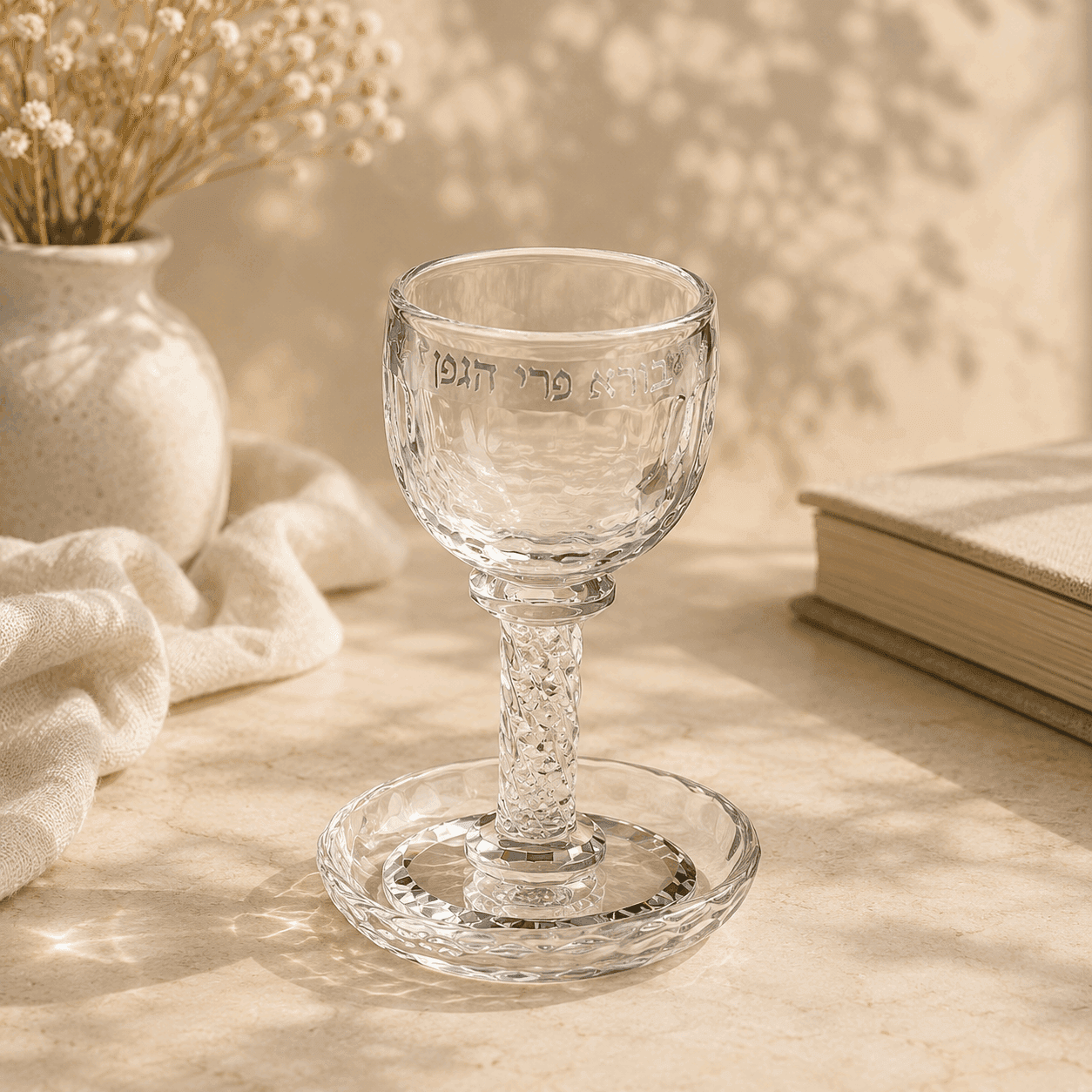
They would find a special cup reserved for the most important moments of the week, placed prominently on the table, carefully cleaned, often beautifully decorated and sometimes passed down through generations.
Naturally, they might assume its importance comes from what it contains.
They would be wrong.
The Most Important Thing About a Kiddush Cup
The most important thing about a Kiddush cup is that it is usually empty.
Think about it.
We do not display it because of the wine inside.
Most of the week there is no wine inside at all.
The cup sits quietly in a cabinet or on a shelf, waiting.
Its value comes entirely from what it represents.
In a world obsessed with possession, the Kiddush cup celebrates anticipation.
It reminds us that some of life's most meaningful moments begin with preparation rather than consumption.
A Lesson in Anticipation
Modern culture teaches us to focus on outcomes.
We celebrate:
- The promotion
- The purchase
- The vacation
- The achievement
Judaism often places equal importance on the moments leading up to them.
Shabbat does not begin when the meal is finished.
It begins when the table is prepared.
The holiday does not start when the guests arrive.
It starts when the home is made ready to receive them.
The Kiddush cup embodies that idea perfectly.
Before it holds wine, it holds expectation.
Why Families Stay Attached to the Same Kiddush Cup
Perhaps that is why families become attached to particular Kiddush cups.
A person may own:
- A newer one
- A larger one
- A more expensive one
yet still reach for the same cup every Friday night.
Over time it becomes associated with memories rather than material.
The cup remembers things we forget.
It remembers:
- The first Kiddush in a new home
- The first Shabbat after a wedding
- The holiday meal when every seat around the table was finally filled
It sits quietly through all of it, asking for nothing and preserving everything.
A Boundary Between Ordinary Time and Sacred Time
What makes the Kiddush cup remarkable is not its silver, crystal or craftsmanship.
It is the role it plays in creating a pause.
Before the blessings, before the meal, before the conversations begin, someone lifts a cup and declares that this moment is different from all the others.
For a few seconds, the rush of the week stops.
- The phone can wait.
- The emails can wait.
- The unfinished tasks can wait.
A simple cup creates a boundary between ordinary time and sacred time.
More Than a Vessel for Wine
That may be why the most meaningful Kiddush cups are rarely remembered for how they looked.
They are remembered for what happened around them.
In the end, a Kiddush cup is not really a vessel for wine.
It is a vessel for moments.
And the reason it matters so much has very little to do with what it holds, and everything to do with what it helps us hold onto.


