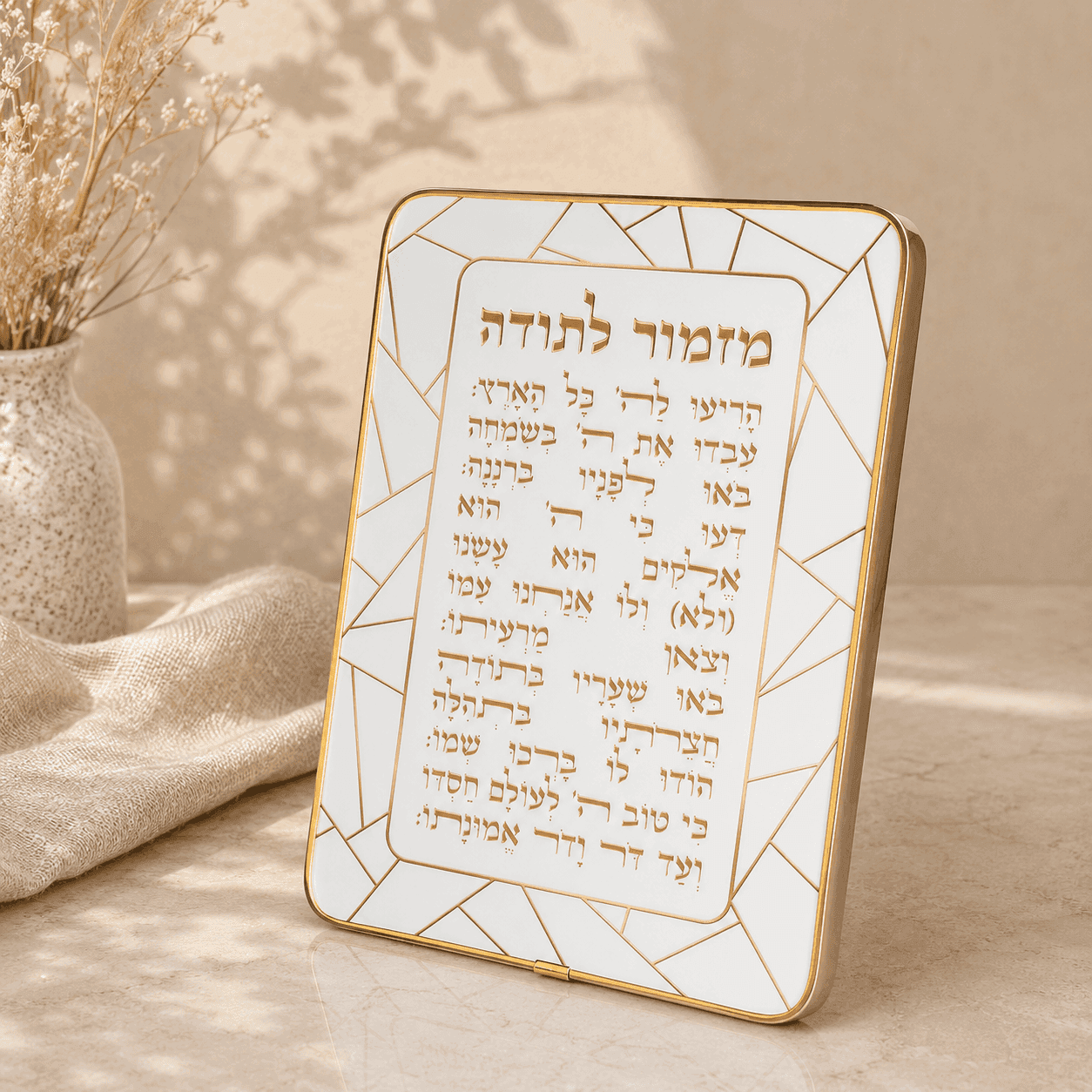
In recent years, one chapter from Tehillim has found its way far beyond the pages of a prayer book. It appears on decorative wall plaques, magnets for the refrigerator, acrylic displays for desks, framed artwork for offices, and even inside personalized Siddurim and Tehillim. That chapter is Mizmor LeTodah (Psalm 100) — one of the most beloved passages in Jewish tradition.
At first glance, it is a short chapter consisting of only a few verses. Yet for generations, Jews have turned to these words as a reminder of something that can easily be forgotten in the rush of everyday life: gratitude.
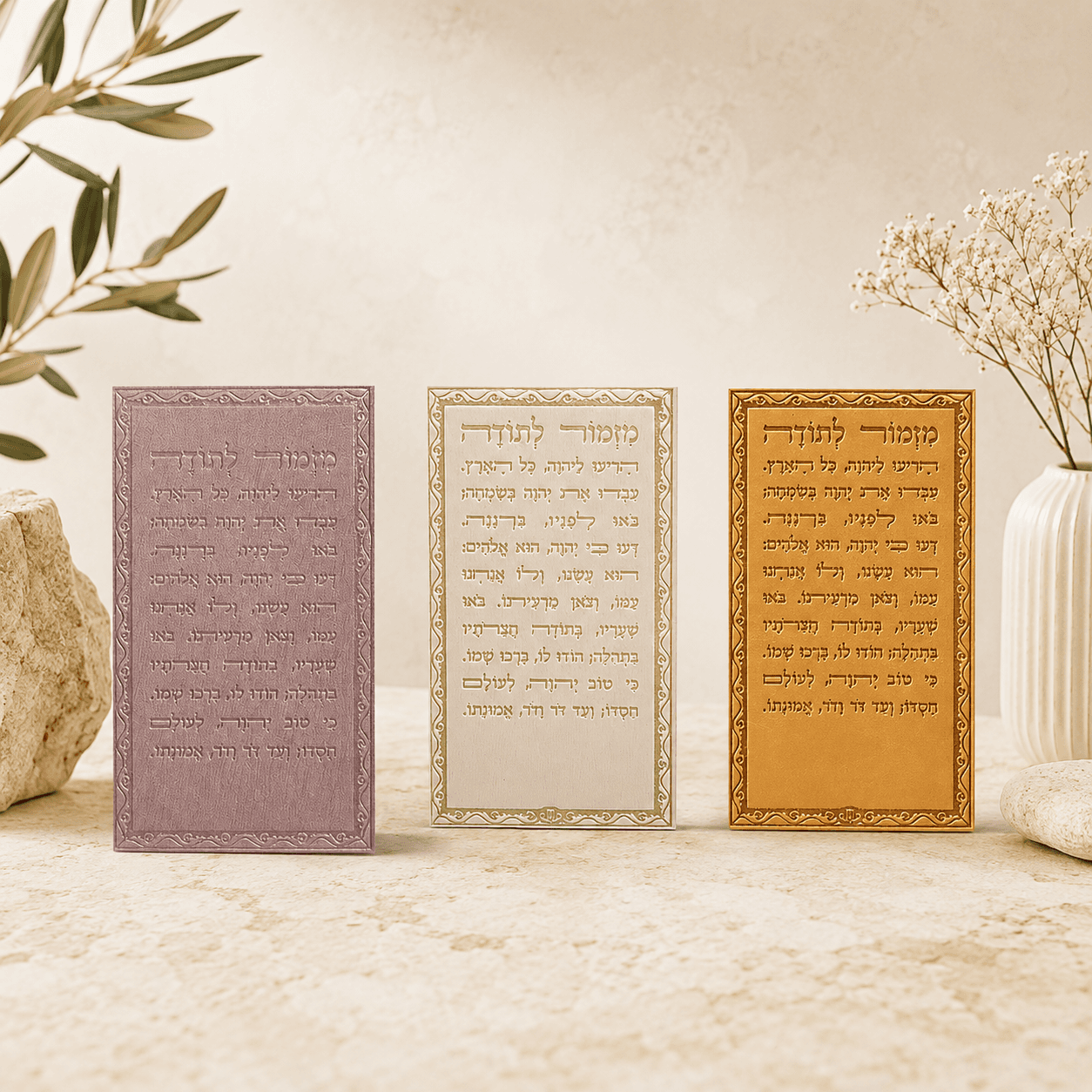
The psalm opens with the title "Mizmor LeTodah" — "A Psalm of Thanksgiving." It is one of the ten expressions of praise found throughout the Book of Tehillim. According to the simple meaning explained by classical commentators such as the Radak, this chapter is a song of thanksgiving to God. Others explain that it was sung when bringing the Korban Todah, the Thanksgiving Offering, in the Holy Temple.
The structure of the psalm is remarkably elegant. It can be divided into three sections. The first focuses on serving God with joy. The second centers on recognizing and knowing God. The third turns toward gratitude and praise.
Within the chapter are seven commands: Call out, serve, come, know, come, thank, bless. The fourth command, "Know that Hashem, He is God," stands at the center of the psalm and forms its spiritual heart. Some commentators note that this placement is intentional. Before truly approaching God, a person must first recognize Who stands before him. Only then can gratitude become genuine and meaningful.
Many explain the progression of the chapter as a journey. First comes emotion, then understanding, then expression through words and actions. Gratitude begins in the heart, deepens through reflection, and ultimately finds its way into speech and behavior.
Perhaps that is why Mizmor LeTodah resonates with so many people today. It is not limited to a synagogue service or a specific holiday. People recite it after experiencing good news, during moments of personal gratitude, or simply as a daily reminder to appreciate the blessings already present in their lives.
There are also well-known customs and traditions associated with this chapter. Some people recite it multiple times before making a personal request, while others make it part of their daily routine. These customs vary from community to community, but they all reflect the same underlying idea: gratitude itself is a powerful spiritual practice.

In a world that constantly encourages us to focus on what is missing, Mizmor LeTodah teaches us to notice what is already there. Health, family, livelihood, friendship, faith, and even the simple gift of another day are reasons to pause and give thanks.
That is one reason why decorative Mizmor LeTodah displays have become so popular in Jewish homes and offices. When these words are visible on a wall, desk, or refrigerator, they serve as a daily reminder to stop for a moment and acknowledge the good that surrounds us. Many designs can even be personalized with a family name, making them a meaningful gift for weddings, housewarmings, Bar and Bat Mitzvahs, and countless other occasions.
Before we finish, let's do what the chapter itself encourages us to do and say these timeless words together.
מזמור לתודה
מִזְמוֹר לְתוֹדָה הָרִיעוּ לַיהוָה, כָּל הָאָרֶץ. עִבְדוּ אֶת יְהוָה בְּשִׂמְחָה; בֹּאוּ לְפָנָיו, בִּרְנָנָה. דְּעוּ כִּי יְהוָה, הוּא אֱלֹהִים:
הוּא עָשָׂנוּ, וְלוֹ אֲנַחְנוּ עַמּוֹ, וְצֹאן מַרְעִיתוֹ. בֹּאוּ שְׁעָרָיו, בְּתוֹדָה חֲצֵרֹתָיו בִּתְהִלָּה; הוֹדוּ לוֹ, בָּרְכוּ שְׁמוֹ. כִּי טוֹב יְהוָה, לְעוֹלָם חַסְדּוֹ; וְעַד דֹּר וָדֹר, אֱמוּנָתוֹ.
English Translation
A psalm of thanksgiving, Call out to HASHEM, everyone on earth. Serve HASHEM with gladness, come before Him with joyous song. Know that HASHEM He is God; it is He Who made us and we are His, His people and the sheep of His pasture. Enter His gates with thanksgiving, His courts with praise, give thanks to Him, bless His Name. For HASHEM is good, His kindness endures forever, and His faithfulness is for all generations.
Whether displayed on a wall, printed on a magnet, placed on a desk, or tucked inside a Siddur, Mizmor LeTodah carries a message that never goes out of style: gratitude is not just a response to blessing—it is often the key to recognizing the blessings that are already there.