
From Raw Wool to a Sacred Tallit: The Fascinating Journey Most People Never See
Most people see a tallit only when it is finished.
Beautiful.
White.
Elegant.
Ready for prayer.
But very few people stop to wonder:
How is a quality tallit actually made?
The answer is surprisingly fascinating.
Long before a groom stands under the chuppah wearing his tallit…
Long before a Bar Mitzvah boy receives his first tallit…
Long before a man wraps himself in prayer on Yom Kippur…
A remarkable process takes place.
A process involving wool, weaving, craftsmanship, Jewish law, generations of tradition, and countless hours of work.
What begins as raw wool eventually becomes one of Judaism's most meaningful garments.
Let's step inside the world of tallit production and discover how a premium tallit is truly created.
A Tallit Is More Than Just Fabric
At first glance, a tallit looks simple.
But every kosher tallit is actually made of two primary components:
The Tallit Fabric
The garment itself, which must meet specific halachic requirements.
The Tzitzit
The sacred fringes attached to each corner of the tallit.
While the finished product may appear straightforward, creating both parts requires an extraordinary amount of precision and expertise.
It All Begins With Wool
Imagine standing inside a textile workshop.
Before you are rows of soft wool fibers waiting to be transformed.
The wool may eventually become:
- A lightweight summer tallit
- A luxurious wedding tallit
- A premium daily prayer tallit
- A Bar Mitzvah gift that lasts decades
But first, the wool must be prepared.
High-quality Israeli manufacturers such as Mishkan HaTechelet begin with carefully selected wool chosen for:
- Strength
- Softness
- Durability
- Comfort
- Appearance
Not all wool is equal.
The quality of the raw wool directly affects how the finished tallit will feel on the shoulders.
Stage One: Creating the Warp Threads
The first major step is known as:
Warping
Imagine hundreds of individual wool threads stretched across a large machine.
Each thread must be perfectly aligned.
The threads are wound together onto a massive cylinder, creating the foundation of the future fabric.
This structure is known as the warp.
Without this stage, weaving would be impossible.
By the end of the process, thousands of feet of thread are organized into a perfectly controlled framework.
It is the invisible skeleton of the tallit.
Stage Two: Weaving the Fabric
This is where the magic begins.
The prepared warp threads are transferred onto an enormous loom.
Now imagine hundreds of threads stretched tightly from front to back.
A second set of threads, called weft threads, begins moving back and forth through them.
Again.
And again.
And again.
Thousands upon thousands of movements.
Slowly, what was once a collection of individual threads becomes fabric.
The tallit literally begins to emerge before your eyes.
How Different Tallit Designs Are Created
Many people assume all tallitot are identical.
They're not.
Different designs are created during the weaving stage itself.
- Colored stripes
- Silver accents
- Black bands
- Decorative patterns
All are incorporated directly into the weave.
Modern looms use highly precise programming to ensure perfect consistency while still preserving traditional designs.
This is where many of the familiar tallit styles are born.
Different Weaves Create Different Feelings
One reason premium tallitot vary in price is the weave itself.
Different weaving methods create dramatically different experiences.
For example:
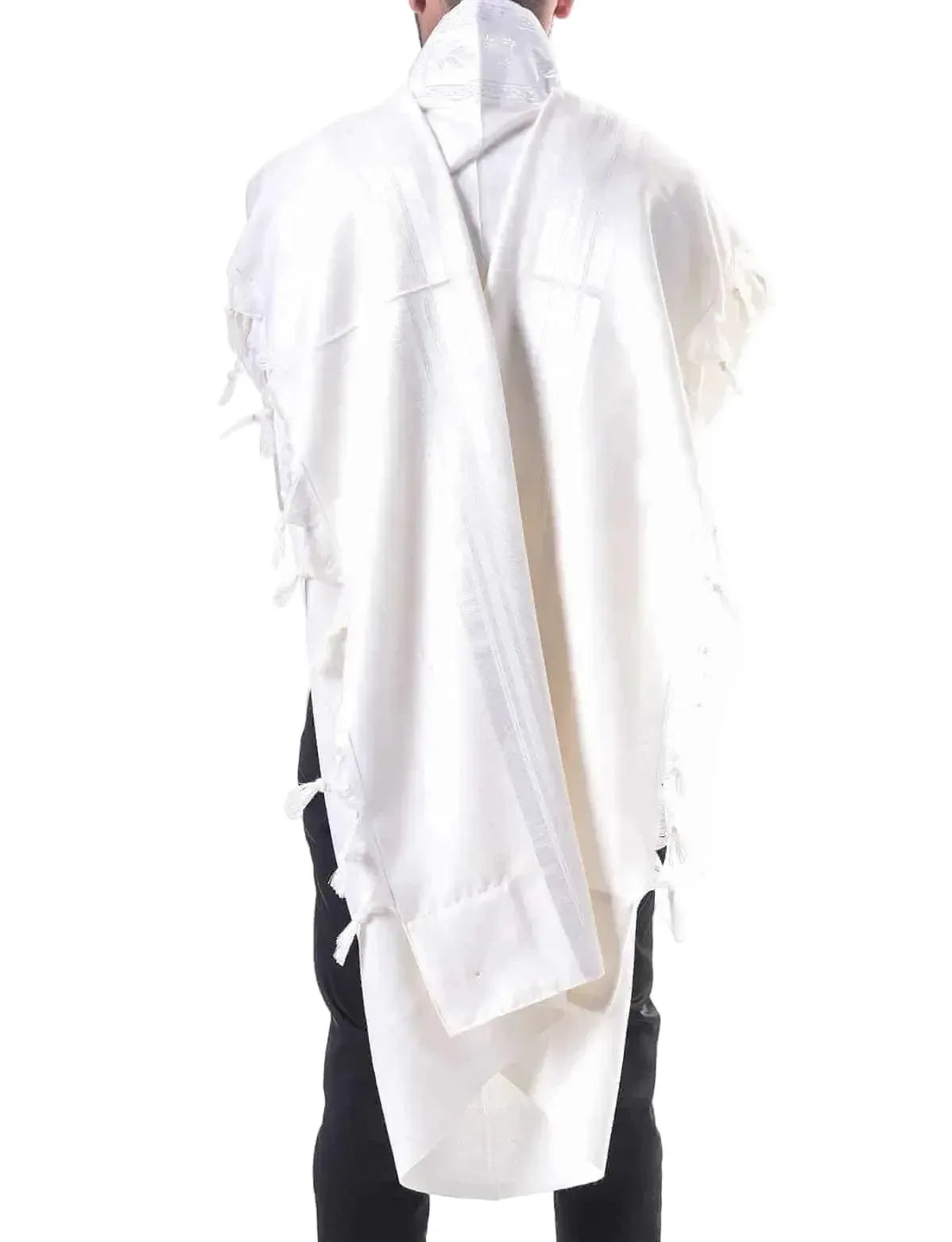
Par Kal
A lightweight weave designed for comfort, especially popular in warmer climates like Florida, California, and Israel.
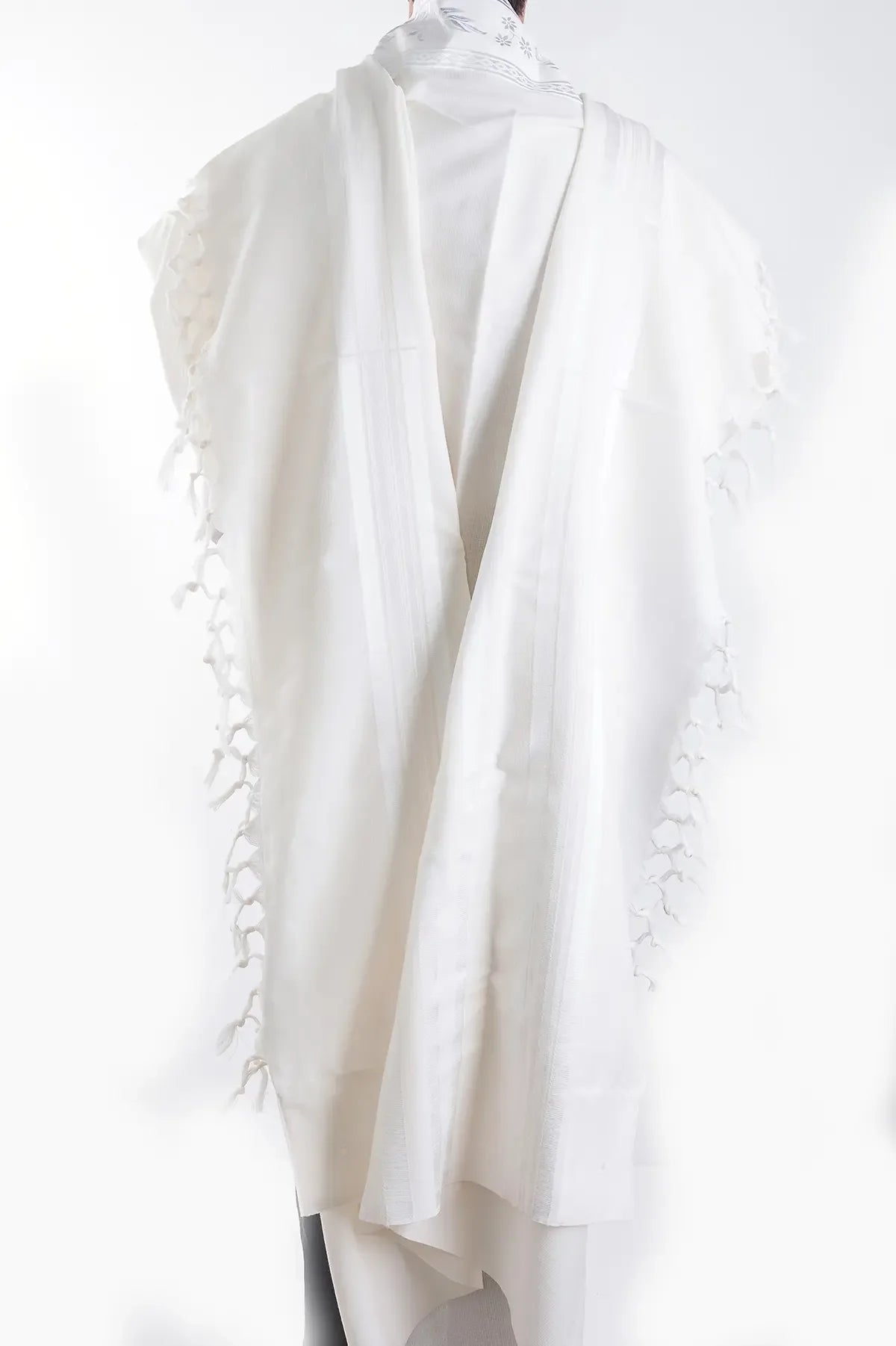
Shacharit
An exceptionally soft and comfortable weave favored by many daily users.
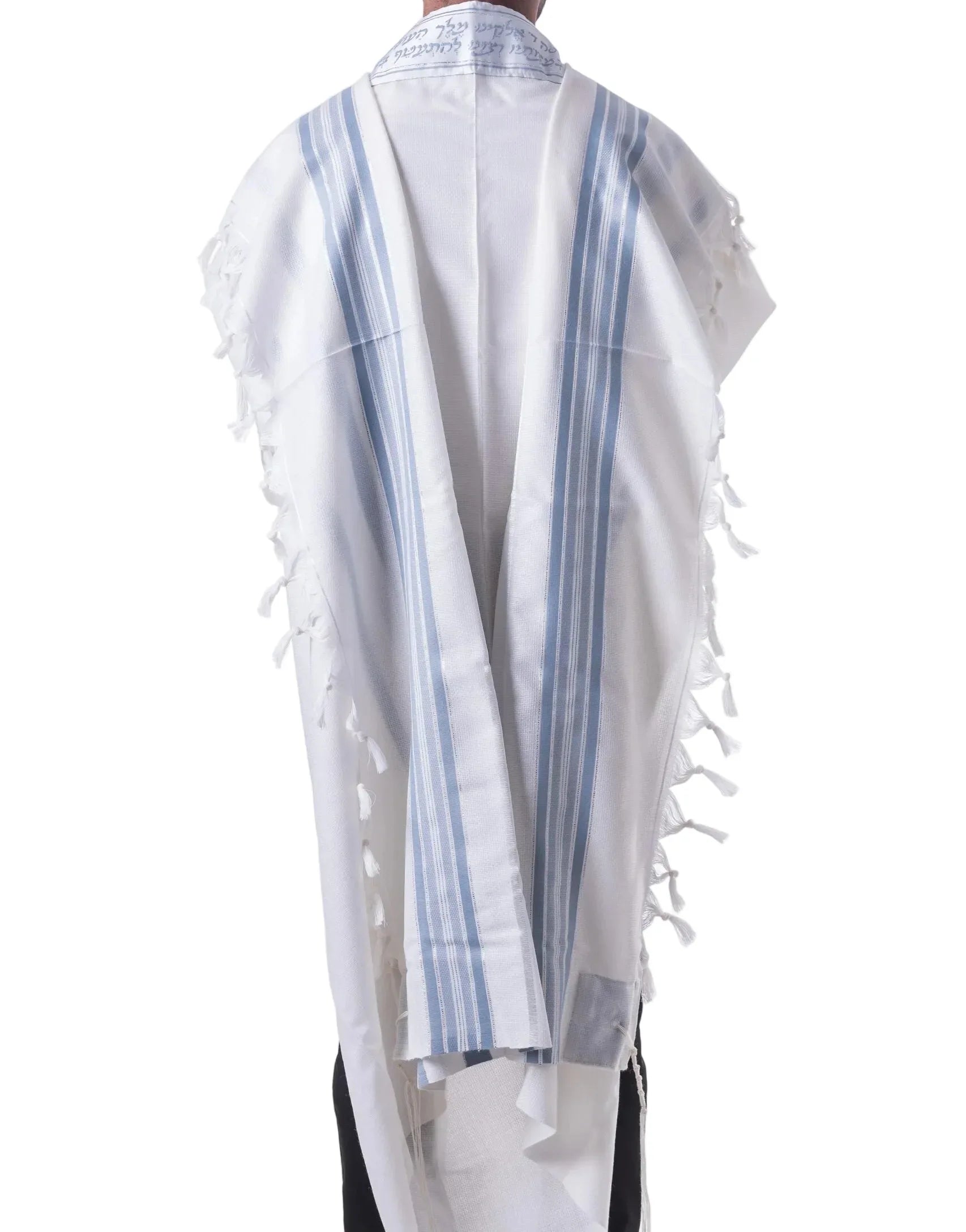
Tashbetz
A stronger, heavier weave with a more traditional feel and structure.
Each weave affects:
- Weight
- Softness
- Breathability
- Drape
- Appearance
The difference becomes obvious the moment you put the tallit on.
Whitening and Refining the Fabric
Freshly woven wool is not the brilliant white most people associate with a tallit.
Naturally, wool can appear:
- Cream-colored
- Slightly yellow
- Dull
- Uneven
To achieve the elegant white appearance associated with traditional tallitot, the fabric undergoes a refining process.
The wool is carefully cleaned, whitened, washed, dried, and pressed.
Imagine watching the transformation.
What began as rough woven wool gradually becomes bright, smooth, and beautiful.
The result reflects the Jewish principle:
"Zeh Keili V'Anveihu"
"This is my God and I will beautify His mitzvot."
Sewing the Tallit
Now the fabric begins looking like an actual tallit.
Skilled craftsmen add:
The Atarah
The decorative neckband often embroidered with blessings or traditional text.
Corner Reinforcements
Strong corner sections are attached to support the tzitzit.
Precision Openings
Small openings are carefully placed where the tzitzit will eventually be attached.
Even these openings differ according to various Jewish traditions.
For example:
- One-hole designs are common among many Sephardic and Lithuanian communities.
- Two-hole designs are common among many Chassidic communities.
- Diagonal hole configurations are often used by Chabad.
These details may seem small, but they reflect centuries of Jewish tradition.
The Most Fascinating Part: Making the Tzitzit
If the fabric tells one story, the tzitzit tell another.
The Torah commands:
"And they shall make for themselves tzitzit..."
The word "make" is extremely important.
Jewish law requires that the production of tzitzit be performed specifically:
L'shem Mitzvat Tzitzit
"For the sake of the mitzvah."
This intention transforms the process from manufacturing into sacred craftsmanship.
From Wool Fiber to Sacred String
The creation of tzitzit involves three major stages.
Step One: Combing the Wool
Imagine raw wool fresh from processing.
The fibers point in every direction.
Large machines carefully comb and align them.
By the end:
- The wool becomes softer.
- The fibers become organized.
- The material becomes ready for spinning.
Step Two: Spinning
Next comes spinning.
The wool is gradually stretched and twisted into a thin, strong thread.
Watching this process is mesmerizing.
A thick strand of wool slowly becomes a precise thread capable of withstanding years of daily use.
Step Three: Twisting
Several spun threads are then combined together.
They are twisted into the familiar tzitzit strings we recognize.
This stage creates the strength necessary for long-term durability.
Four Levels of Tzitzit Quality
Not all tzitzit are created equally.
There are several recognized levels of craftsmanship.
Machine-Made Tzitzit
The most common option.
Machines perform much of the work while trained operators supervise with proper intent.
Hand-Made Tzitzit
The spinning and twisting are performed manually.
Many people prefer this level of craftsmanship.
Hand-Made from Prepared Wool
The process begins even earlier, with greater human involvement.
Nifutz Lishmah
This is considered among the highest levels of tzitzit production.
Every stage is performed specifically for the mitzvah.
From the earliest preparation of the wool through the final twisting of the strings.
These tzitzit are often chosen by those seeking the highest level of hiddur mitzvah.
Why Premium Israeli Tallitot Matter
When people purchase a premium tallit from Mishkan HaTechelet, they are not simply buying fabric.
They are benefiting from generations of expertise.
Every stage matters:
- Wool selection
- Weaving
- Finishing
- Stitching
- Tzitzit production
- Halachic precision
The result is a tallit that feels different from the moment you wear it.
A Tallit Is More Than a Garment
By the time a finished tallit reaches its owner, hundreds of individual steps have already taken place.
What began as raw wool becomes:
- A Bar Mitzvah gift
- A wedding tallit
- A companion for daily prayer
- A family heirloom
The next time you see a tallit folded neatly in its bag, remember:
Behind those white folds lies a remarkable journey of craftsmanship, tradition, beauty, and mitzvah.
And perhaps that is what makes a tallit so special.
It is not merely worn.
It is lived with.
Looking for a Quality Tallit?
At Orot Judaica, we proudly offer premium Israeli tallitot from Mishkan HaTechelet, one of the most respected names in the world of tallit production.
Whether you're searching for:
- A wedding tallit
- A Bar Mitzvah tallit
- A lightweight Par Kal
- A luxurious Shacharit weave
- A traditional Tashbetz
- Premium tzitzit options
we would be honored to help you find a tallit that will accompany you for years of prayer, celebration, and Jewish life.


